
Lessons from being two
chasing mischief

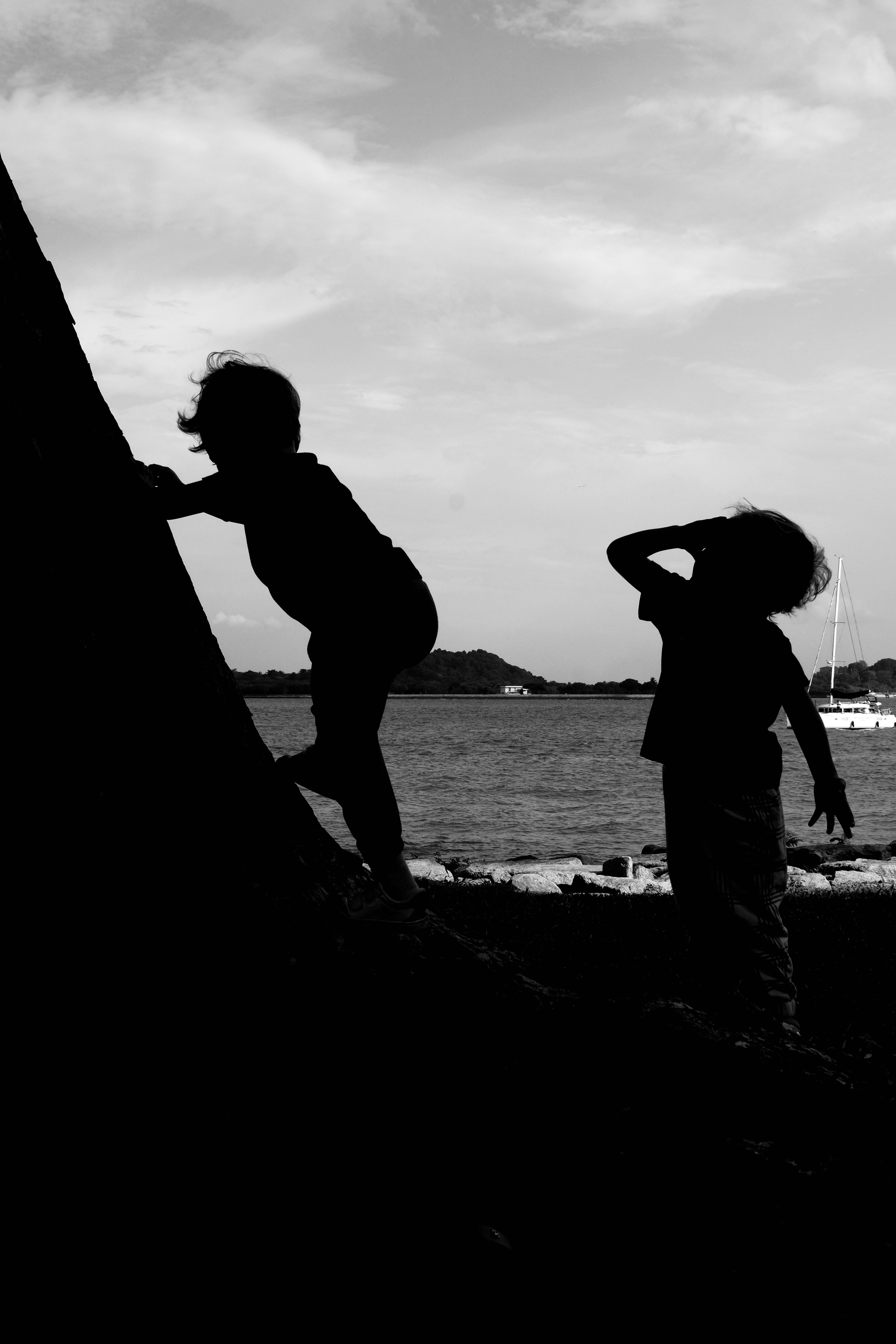
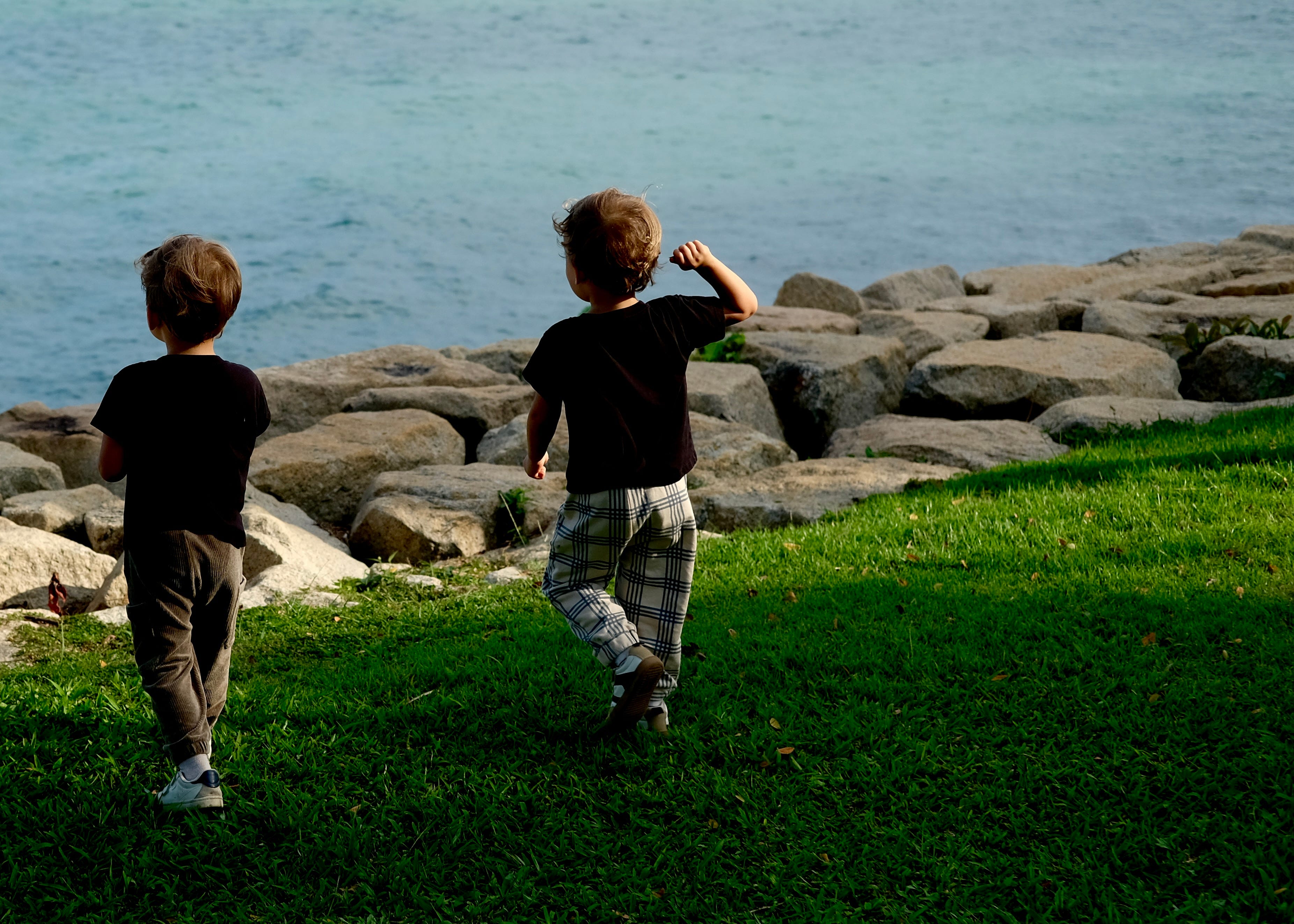
One of the best things in my life is that I get to spend a considerable amount of time in the company of very sweet two-year-old identical twin boys. They will be three in 4 months. I have been their ‘auntie Sam’ since they were three weeks old, and I have had the eye-opening experience of watching them grow. I have also had the privilege of being their chief photographer and have consistently captured their little faces and expressions.
I recently attended a toddler gym class with them. When you don’t live with small ones, being surrounded by 12 of them for an hour is an unusual experience. That stage of my parenting was so long ago, and there have been so many stages since that I forgot how utterly delightful it is to be surrounded by tots who have the attention span of a… well, a toddler. They move swiftly from one thing to the next, taking delight in each sensation. Bubbles!! Bouncing!! Finger puppets!! The glee!
It made me wonder about how things change as they get more and more complex. The toddler mind sweeps up anything on offer, as if it is at a giant buffet of novelty and surprise. Fixation, stress, concern, these things don’t yet exist. Temperaments are fragile, though. A slight affront, a minor tumble, a sharing dispute, or even the wrong snack could set things down a tumultuous path. Hell has no fury like a toddler with the wrong water bottle.
I heard about an exciting ‘first'.’ Of all the stages, this might be my favourite one. The little boys have started to ask ‘why?’ Their parents are in for a treat. This is a chance to hear what makes them wonder, to teach them something and, best of all, in time, figure it out together, or show them how to find answers. The first time a child asks “why” is a profound moment. The "why" phase is arguably the purest expression of human curiosity before social inhibition kicks in. A child has learned that they are an autonomous person, separated from the rest of the world by a very thin membrane. Once they know they are a person (imagine that!), they start to ask why, trying to understand how the world works. They get curious. They start looking around and noticing. Their little brains are firing. Soon there will be a chorus of ‘whys’, and sometimes their grownups might not have the answers.
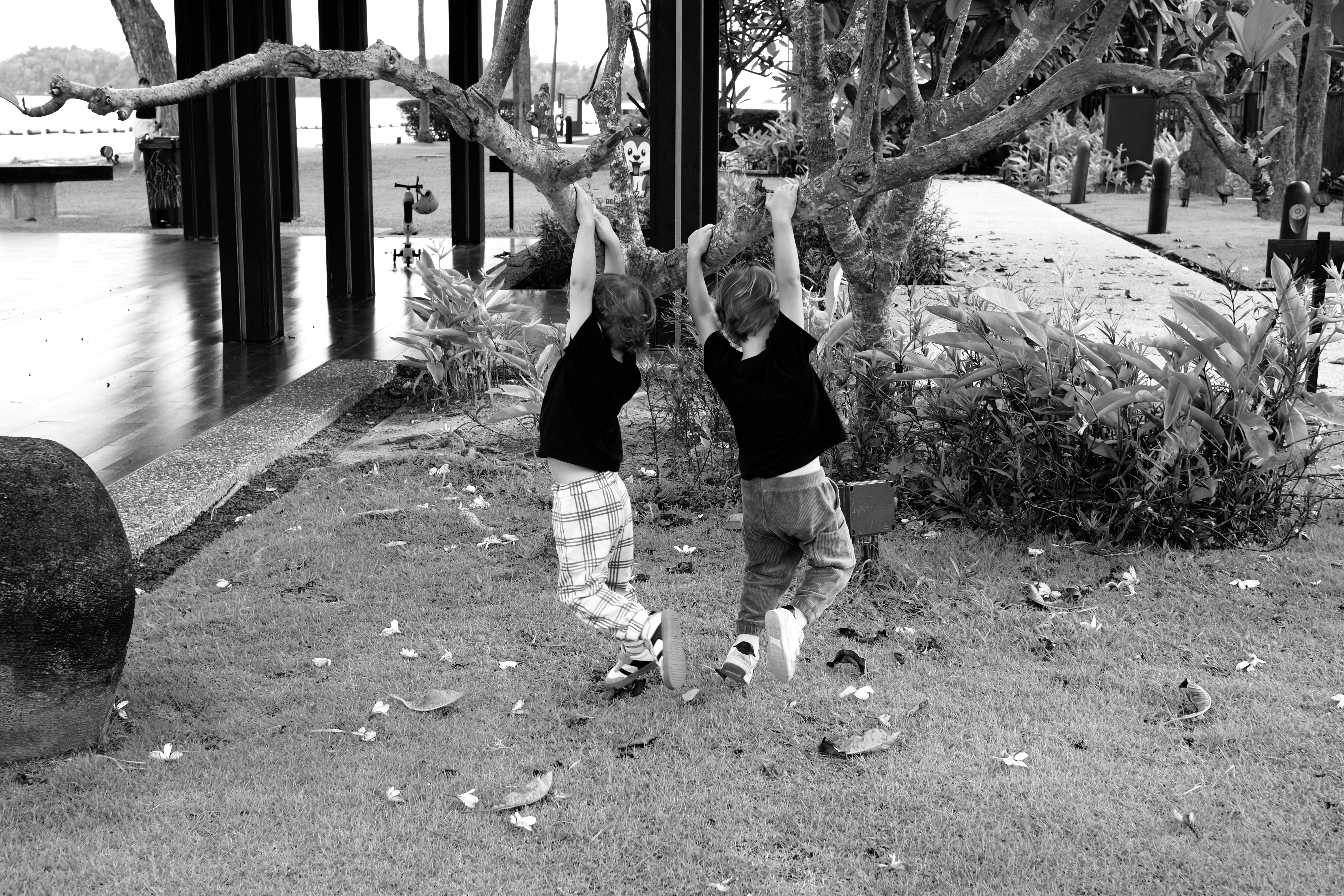
I have learned a few lessons from these young chaps.
When it is time to eat, go for it. Take that little dish of chopped cucumber and tip it into your bowl. Announce everything you like. Enjoy the food.
Oatmeal before bed is a good idea.
It is ok to stand up and have a little run around in the middle of a story. (We put our books down for lesser reasons.)
Give hugs freely.
Let the wind ruffle your hair. It feels nice.
If there is water around, you should probably go for a swim. Even if you are fully clothed.
Be brave. You can scooter as fast as you can because your parents gave you a helmet.
Going to bed early and on time. No excuses.
Chaos can be creative. In the toddler world what looks like chaos is actually a brain operating without its executive "brakes." This is a kind of radical presence that adults spend years trying to recapture through meditation.
No dawdling in bed in the morning. When you wake up, go and get it! It is a new day, and things will definitely happen.
Let go of what you don’t need. The toddler brain is sculpting itself based on experience. Growth requires letting go of what isn't being used.
Get dirty! Explore! Lift up rocks and find the ants beneath.
Learn new words! Even make them up: language is storytelling, language is an act of creation. Name your world, name your feelings.
Play, play and play some more. In toddlers, play isn't recreation — it is development. Adults can develop through play and experimentation too. So play without justification.
The world of imagination is the world of wonder. This is where small children live.
Don’t stop asking why. Be relentless with your curiosity.
Small children don’t care about ‘shoulds.’ A friend went on holiday to the Caribbean island of St Lucia. He returned, saying it was the most beautiful place he had ever been. The volcanic rock, the emerald green mountains, the turquoise sea. His three-year-old didn’t share his views. She only wanted to stand in the restaurant in front of the cereal dispenser. Nothing else interested her. She was fixated on the mystery of a machine where a turned dial unleashed a torrent of colourful fruit loops. She grasped what grabbed her and followed it. Who cares about the splendour of the planet when cereal poured forth?
It is also interesting to see what parenting is like in 2026. I had toddlers from 1999 to 2004 - a different era. There was no internet. For information and reassurance, I had books, and I had friends. We were not experts. We couldn’t Google anything. And there was no noise telling you how you ‘should’ be or offering comparisons on the hour. We were worried about different things. Our child being snatched, chief among them. There was an infamous Oprah episode when a man impersonating a kidnapper was directing children in his van to see puppies. It terrified all of us. Crossing the road, unfriendly dogs, Halloween candy laced with glass: these were our fears. Now there is a different cloud that hangs over a lot of parenting; we know more. Parents have to actively work against a tide now. These little boys have no screen time, unlike so many of the small children glued to iPads and phones, their earphones blinking, in restaurants.
My husband returned from a recent business trip to Indonesia with a large tub of dates he received as a Ramadan gift. I love dates. I have been eating them at every meal, and today, I turned the tub over to see where they are from. The place leapt out at me: Iran. Each of these dates comes from a tree in Iran, a country now thrown into war. I imagine the farmer’s hands, the woman carefully boxing the dates, gently wrapping them in cellophane before closing the lid. I imagine the truck driver taking them to the cargo facility. I feel a cognitive and spiritual dissonance as I try to process so much beauty, deliciousness, and tragedy at once. Oscar Wilde said, “Life is a tragedy to those that think,” and he was right. The knowing and the thinking and the processing make everything hard; we cannot unsee or unknow what we know. But when I look at my little two-year-old friends, I see something very refreshing: to be fully in the moment, to enjoy with no guilt, to suck the juice of life. Not to turn off what we know, but to embrace a beginner’s mindset. If we could slip into the toddler way of being, just briefly, we might process joy and sadness in equal measure. They feel it all, and so can we.
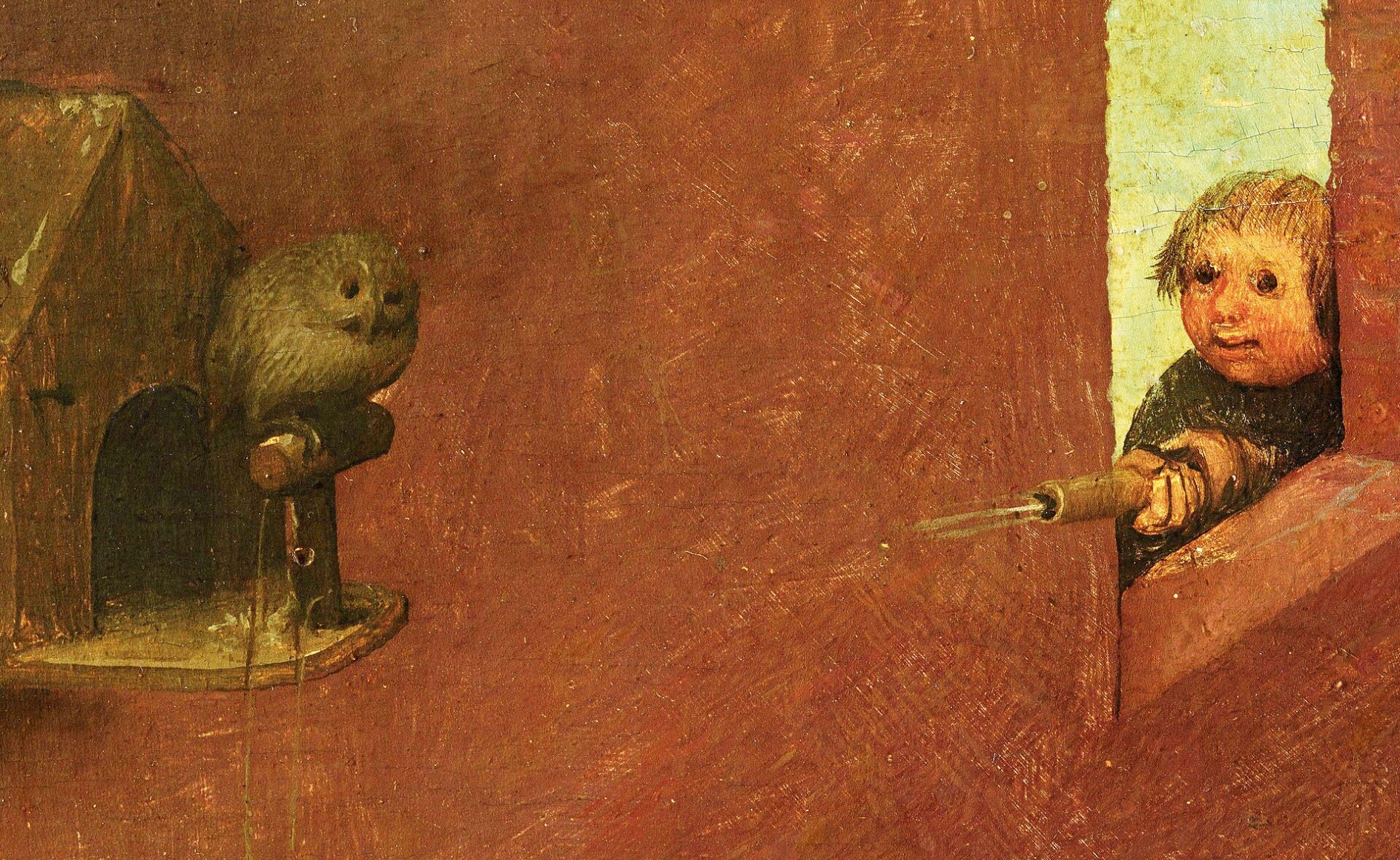
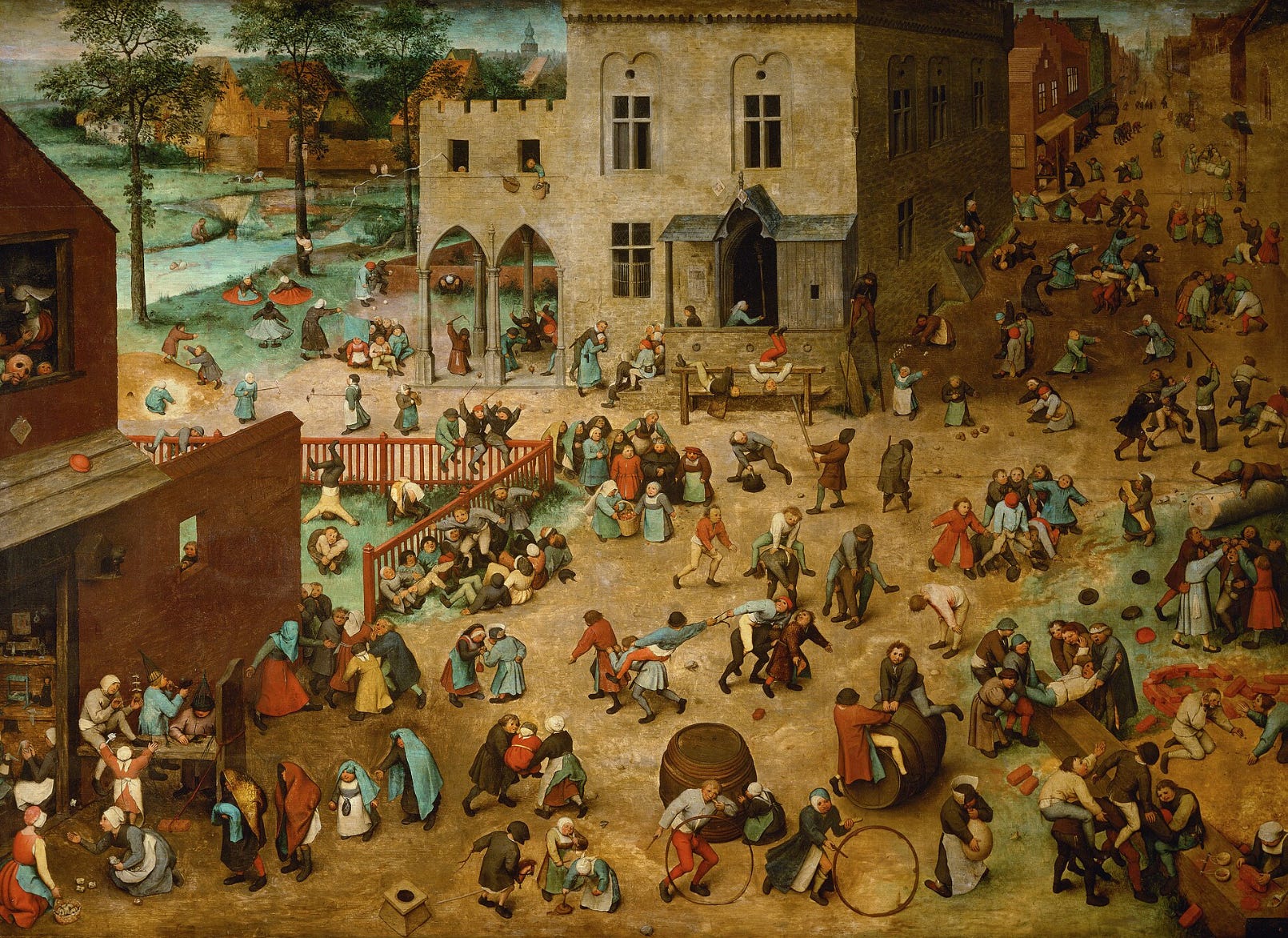
In thinking about what toddlers can teach us, let’s look at the painting at the top of this essay. Here, Bruegel shows dozens of children absorbed in over 80 different games across a town square — completely unselfconscious, fully present, and deeply purposeful in their play. He paints children absorbed in their games with the seriousness of adults in their apparently more important pursuits. His moral is that in the mind of God, children’s games possess as much significance as the activities of their parents. Even if it is shooting water at an owl. Proof that mischief was alive and well in 1560.
Maybe that is the ultimate lesson. A little innocent mischief, a moment or two of high-spirited fun, and some gentle foolishness might be the remedy we need. Let’s try to find the little toddler that lies buried in us all. Spit spot.
“In every job that must be done, there is an element of fun. You find the fun and snap, the job's a game"
Mary Poppins
P.S Just a little reminder that little ones can be devilishly cute and can tell stories too.
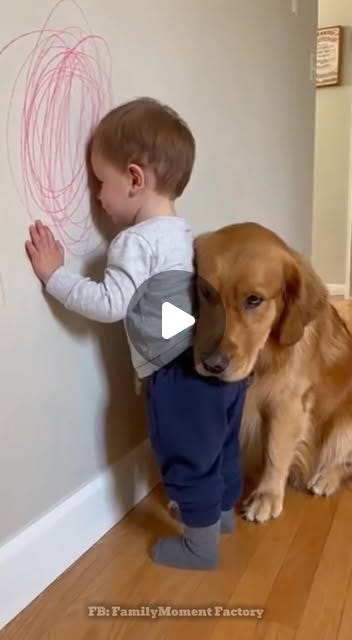
Thank you for reading, my inner toddler helped me write this. If you enjoyed, please appease the algorithmic gods and tap the heart. It helps people find me. Sam x
(all photos taken by ©Samantha Chesler)