
A messy time
Turning to the moon

You hear it all the time when you are an expat. How long have you been here? Where next?
This life is transient. Everybody comes, stays awhile and leaves. It is the nature of the expat game.
When I was 4, I moved to Hong Kong. When I was 9, I moved to Tokyo. At 13, I left to go to boarding school, but home remained in Tokyo until my parents moved to New York when I was 17.
There was a long chain of goodbyes.
London became my home then. It was the only place that was certain with all the moving and changes.
When I was 23, I moved to Canada. When I was 38, I moved to Trinidad and Tobago—and so began the long and winding road that took us around the globe until we settled in Singapore. It has been 7 years. There have been countless goodbyes.
Your friends become your chosen family when you live overseas; they become the people you call when you need to celebrate or need cheering up. But then, they too move on.
For most of my life, saying goodbye has been the default. Meeting new people and starting again has been normal.
I have always been the global girl, the unrooted one, the nomad who belongs everywhere and nowhere.
Now, something has changed. I have grown weary of the moving, the transience, and the feeling of never being grounded. I am home in Montréal, and I am home in London. But I am not home in Singapore. Yet, it is where I live. This conundrum has now settled in me like an angry bird, rattling cages, wanting out.
This newsletter is called Notes from the Middle because I am trying to figure out how to navigate this messy place between there (looking behind me) and there (looking ahead). The here and now. Being really present is tough for an expat because looking back to where you were and thinking about what’s next is, well, just normal. How do we make peace with the middle, in other words, where we are now? Especially if it is no longer ideal.
We need to use a poet’s heart to help us through.
I recently learned that in Japan, the phrase “the moon is beautiful, isn’t it?” is a secret way to say I love you. In a culture that prefers to use metaphor, to be indirect rather than obvious, the overt showing of feelings can be considered impolite. But in reply to “the moon is beautiful”, one can say, “and so are you.” And thus, the confession is made. Love is shared.
We may be miles apart, but we are still under the same moon.
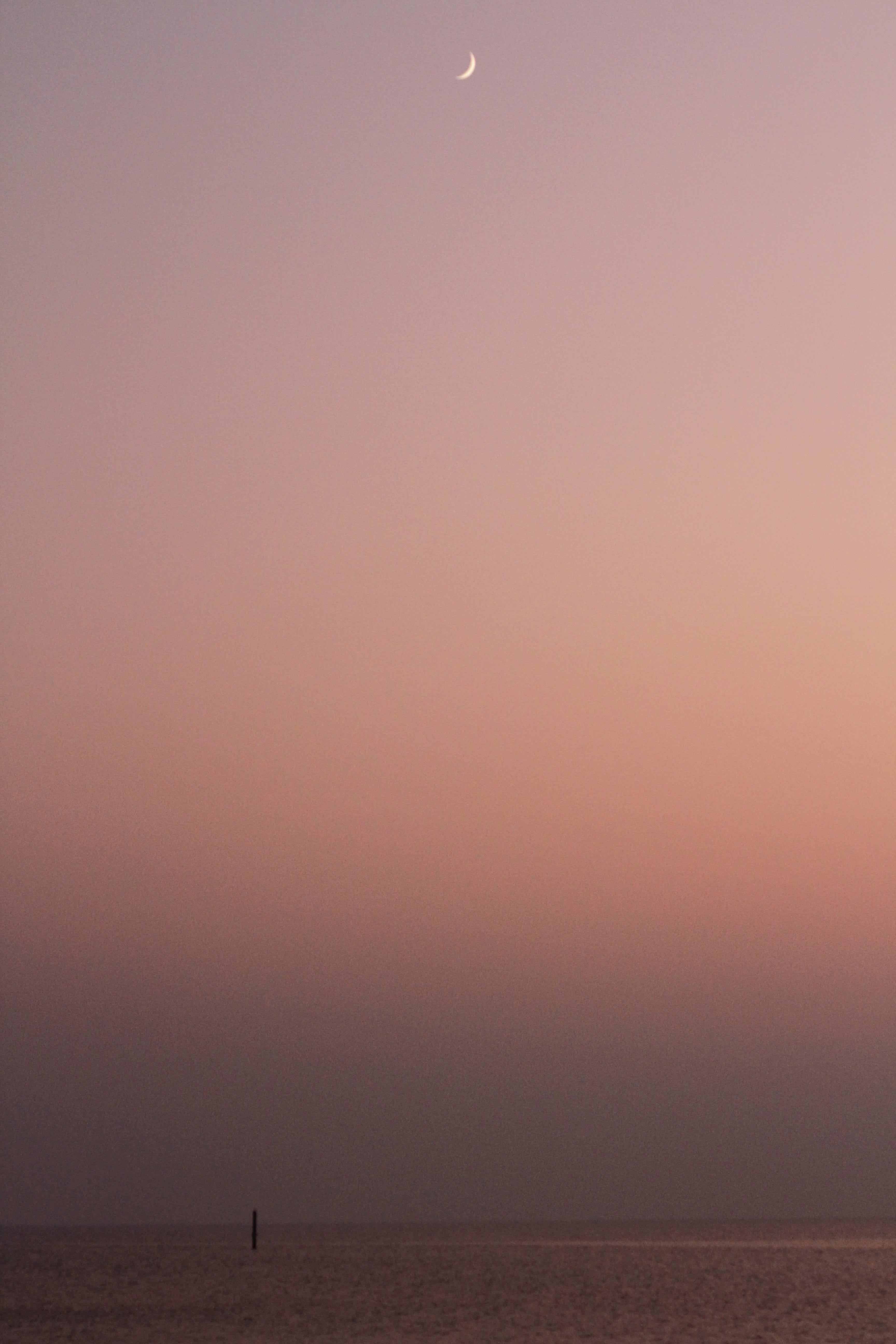
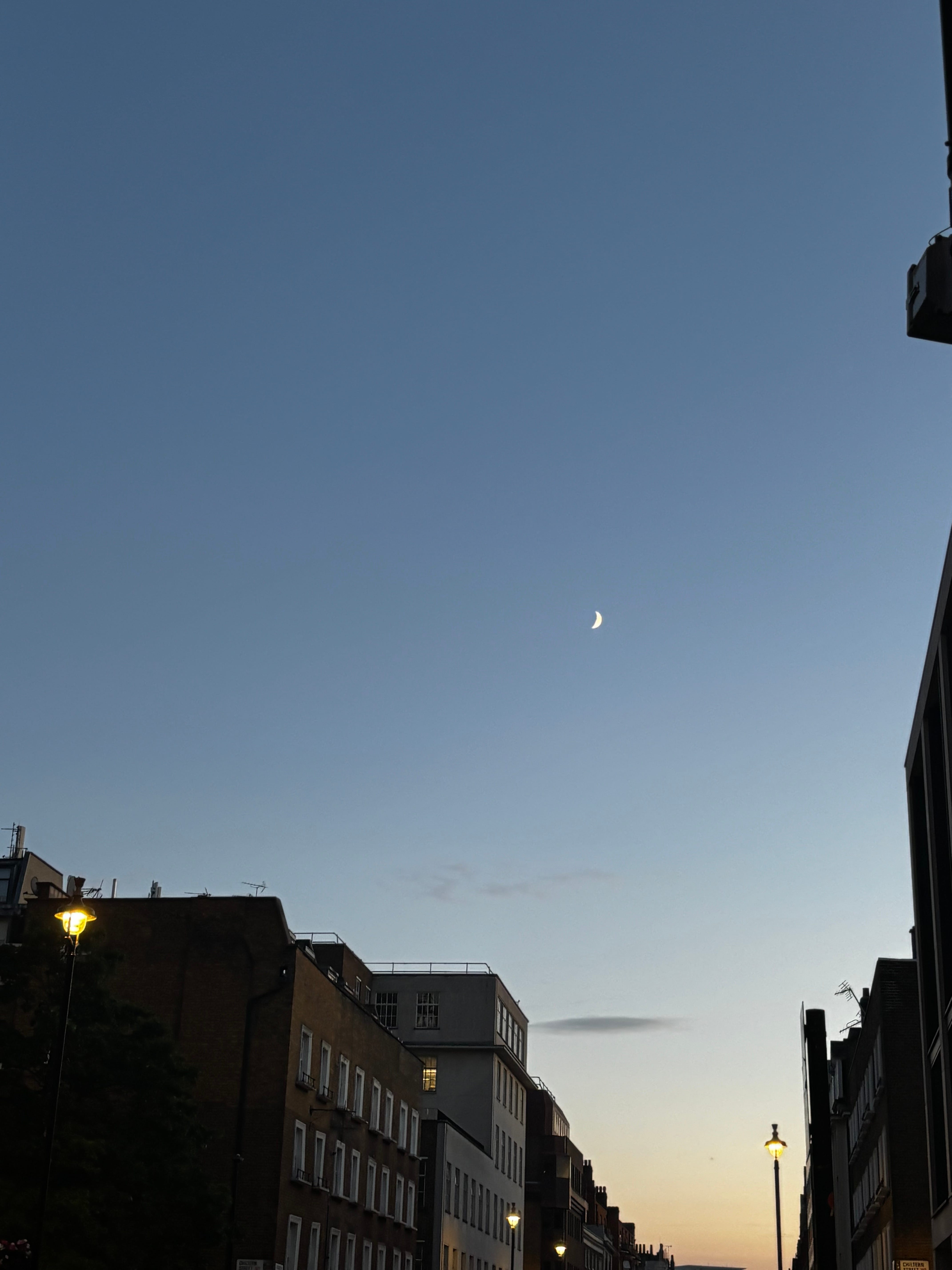
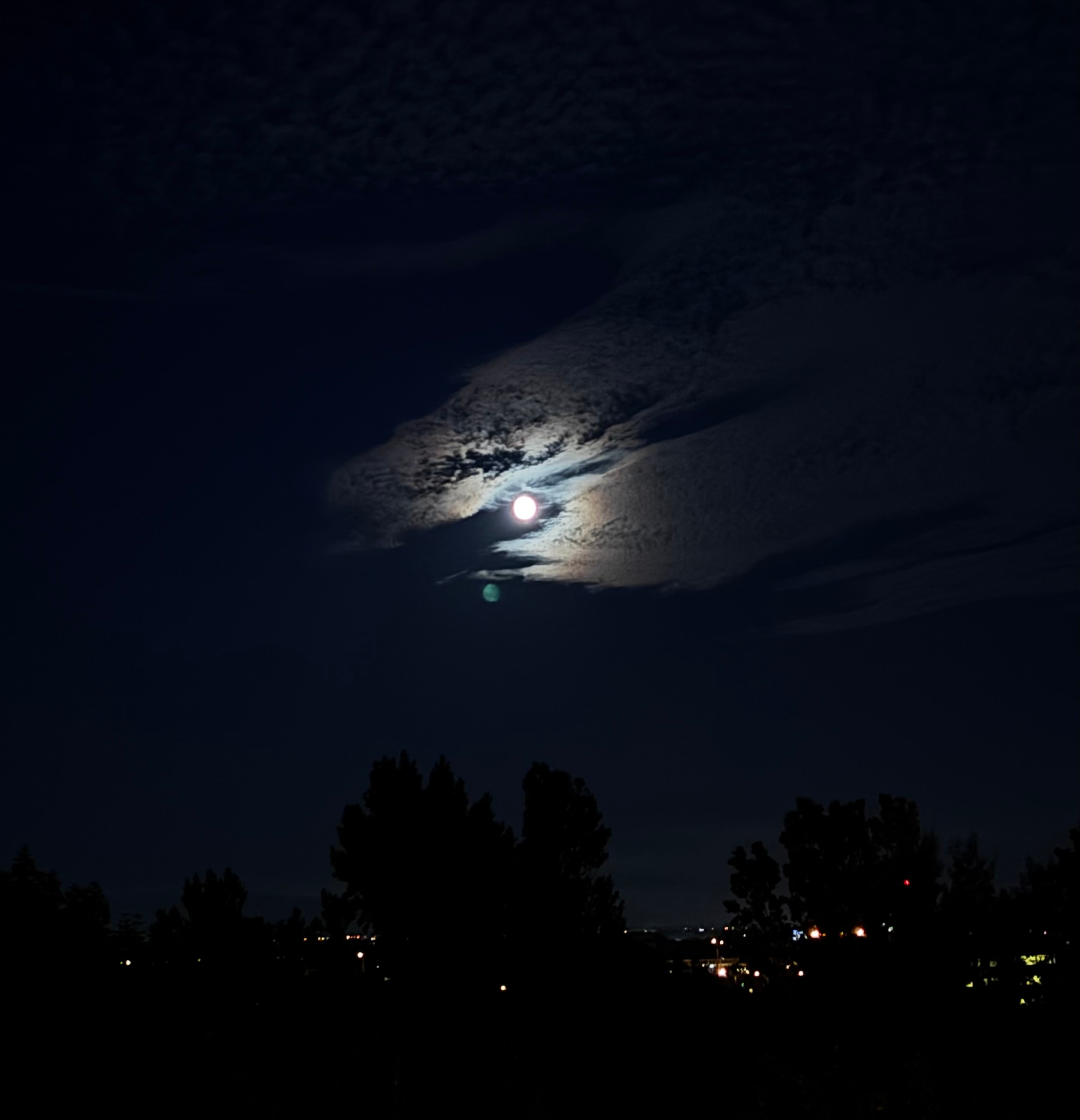
I spent a lot of time looking at the moon this summer, and trying, often in vain to photograph it. I think the longer nights made a difference, being outside when the moon rose, or perhaps it was how different the skies are in Europe and America. I have always gazed at the moon, but, of late, the moon seemed to be gazing back at me.
One of my favourite poems is Full Moon and Little Frieda by Ted Hughes. You can hear the sounds, feel the tension of the night, see the moon’s wobbly reflection, before we catch sight of it, at the same time as little Frieda.
Full Moon and Little Frieda
A cool small evening shrunk to a dog bark and the clank of a bucket -
And you listening.
A spider's web, tense for the dew's touch.
A pail lifted, still and brimming - mirror
To tempt a first star to a tremor.
Cows are going home in the lane there, looping the hedges with their warm
wreaths of breath -
A dark river of blood, many boulders,
Balancing unspilled milk.
'Moon!' you cry suddenly, 'Moon! Moon!'
The moon has stepped back like an artist gazing amazed at a work
That points at him amazed.
Hughes describes a tender and reflective moment: showing his daughter, Frieda, the full moon. It is an ordinary moment made extraordinary. But it is also a reflection on the interconnectedness of nature and art. The moon is personified and looks back at the small child with equal wonder. Who is the creator here? Nature, and the moon, or the poet? Can the poet exist without the impetus of the natural world? Notice how he describes the cows coming home in the dark, under the moonlight, as “boulders balancing unspilled milk.” It is the moon that has created all he admires, the moon that lights up his daughter, the moon that places the pen into the poet’s hand.
The moon helps us to find wonder in the ordinary, to be small in the face of big, hard things. The moon reminds us, change is constant. The tides will come, and with them, there shall be a cleansing, a renewal. We must gaze and wait.
This feels like a fallow time, a waiting for something to change. I have returned different and I want different things. But change takes time; things must be left to restore, to replenish. This period of adjustment is hard. When you are in it, the horizon feels far. I turn to the moon to pull me, to root me.
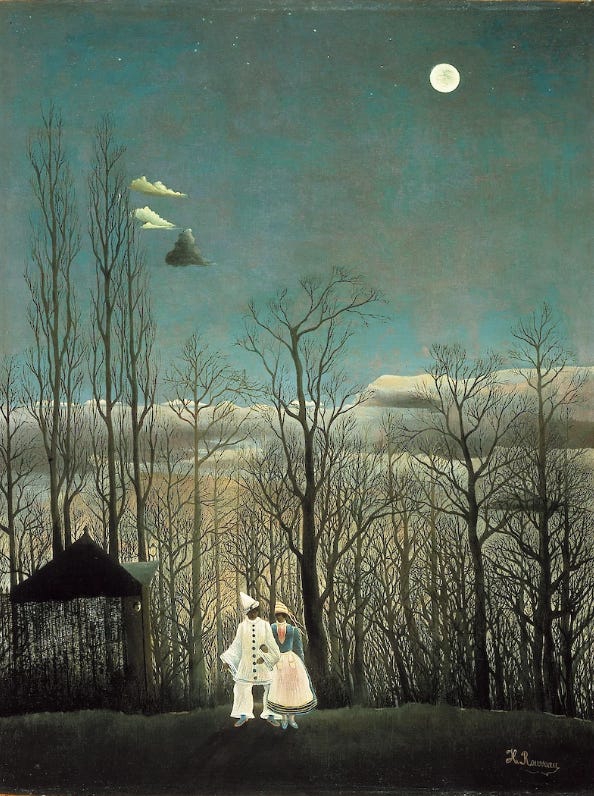
Or, delight me, as it does in this painting of a carnival evening. A carnival, a rumpus, always takes place under a full moon, does it not?
As I write this post, the moon is full, but the skies are overcast. The moon strains to show off, but the skies in Singapore will not oblige.
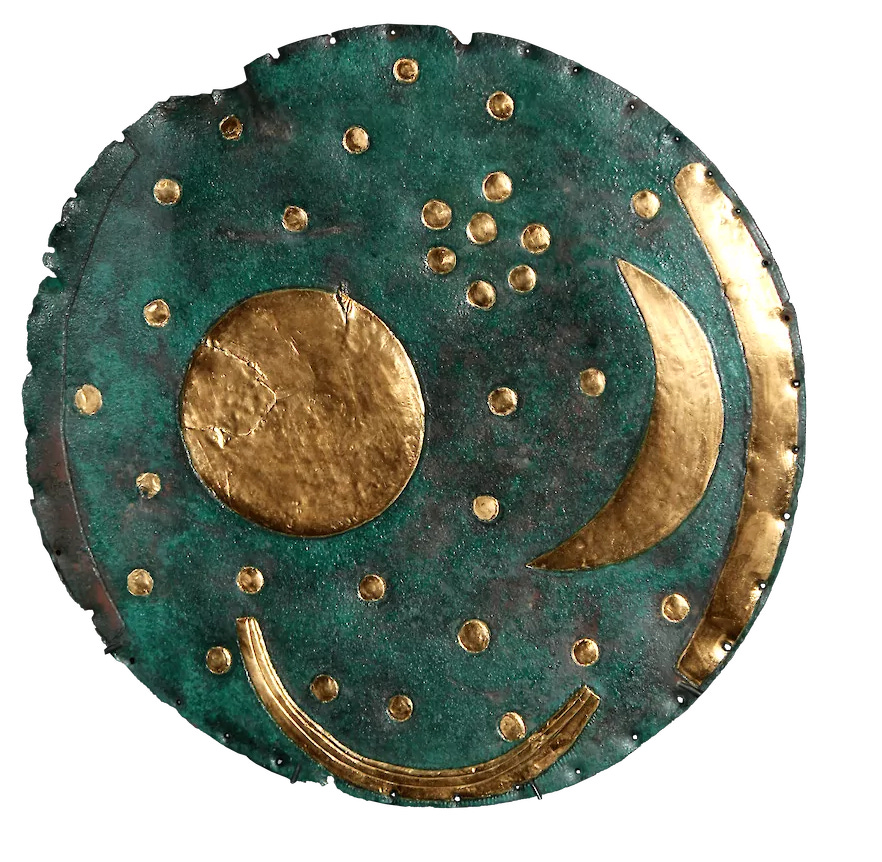
Art and poetry point us in the right direction, like the moon, always giving us pause.
In these words, the poet Wendell Berry celebrates this betwixt time.
It may be that when we no longer know what to do, we have come to our real work, and when we no longer know which way to go, we have begun our real journey. The mind that is not baffled is not employed. The impeded stream is the one that sings.
—WENDELL BERRY
My mind is baffled. My stream feels impeded. And I listen for its song.
Still, as Mary Oliver writes: “Joy is not a crumb”, and I will look, listen and hunt for the little joys in this messy time.
Thank you for reading. If you enjoyed this, please tap the heart button, comment or share. It helps readers find me. Sam x
Astrologically, this is a big year. Endings. Beginnings. Change, upheaval, drama as the new normal. This past full moon was also a lunar eclipse. A friend and talented astrologer described what many are feeling as being ‘eclipsed’. It’s a great time to take care of yourself - and to gaze at the glory of the moon. x
Again, you’ve captured a sentiment perfectly and beautifully. Miss you!